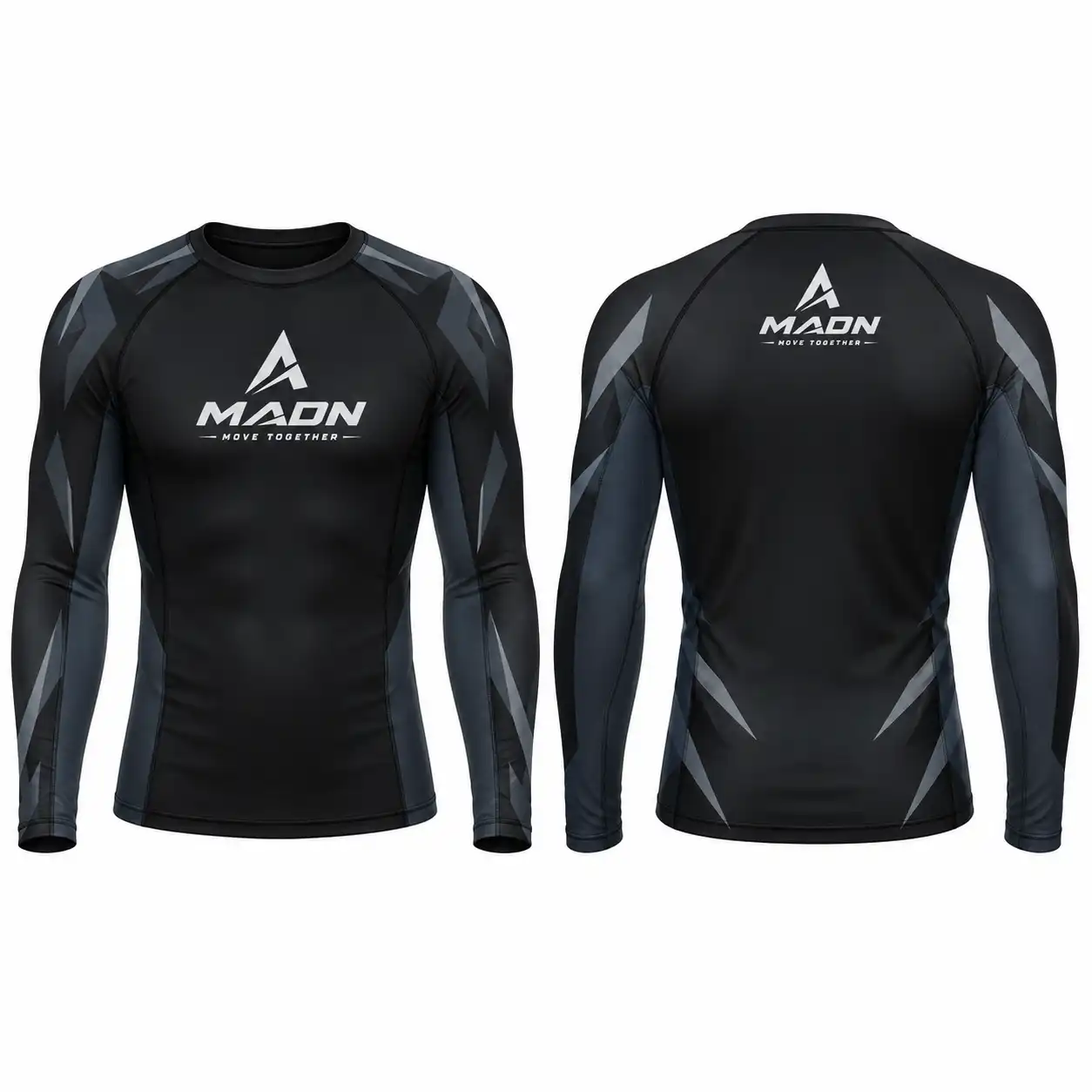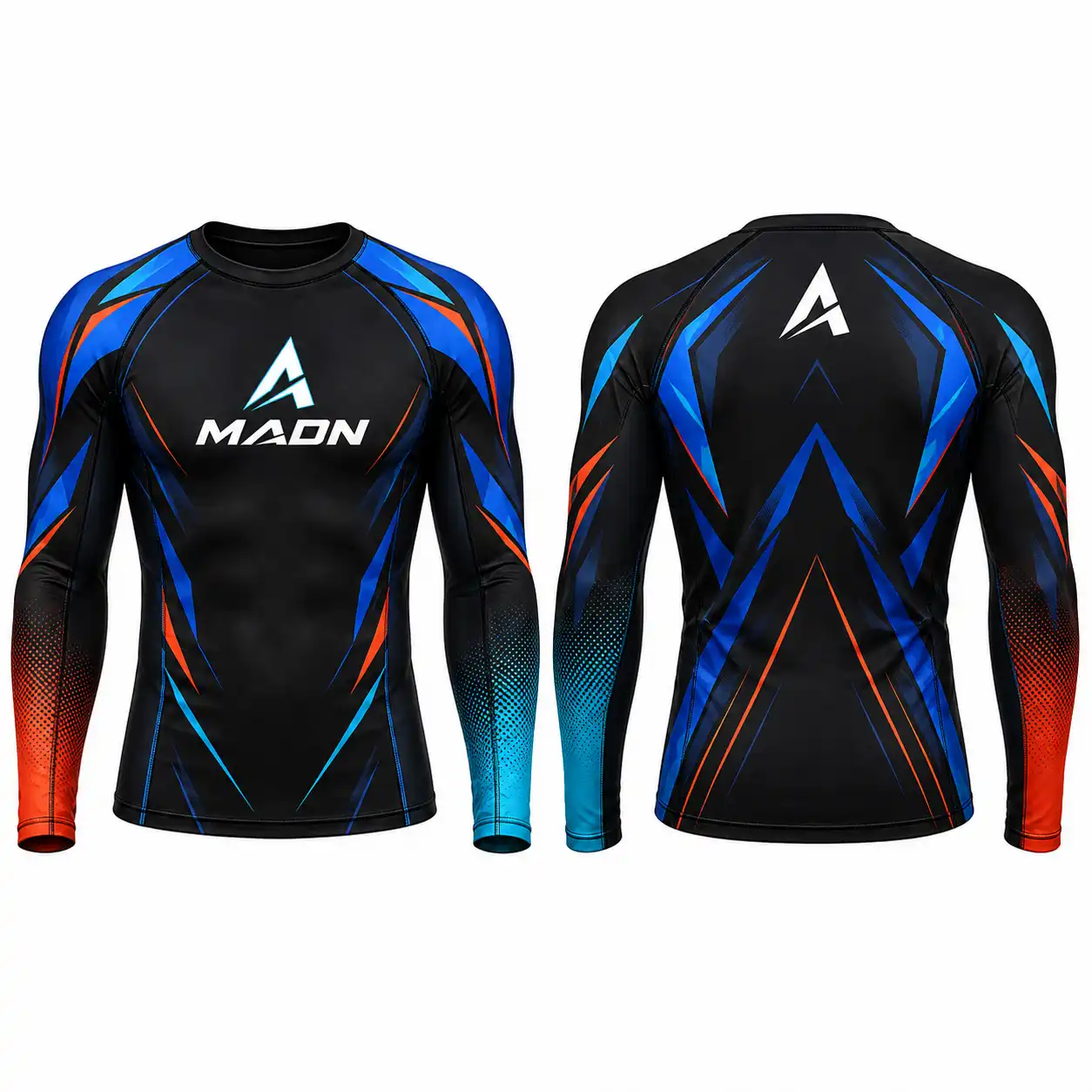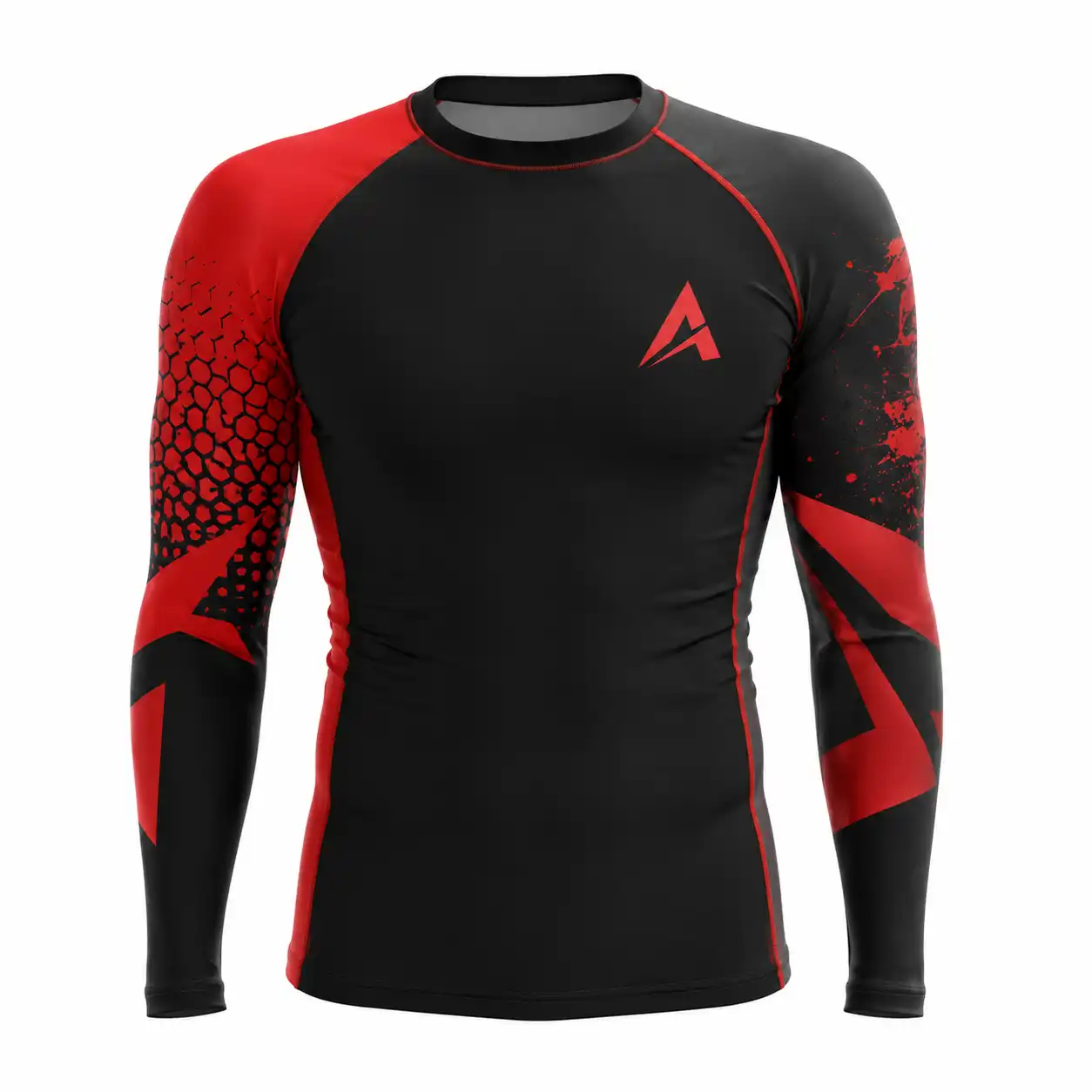
Rash Guard

New Arrival Rash Guards
Made to OrderSample Available

Rash Guard

SKU: MSCW-RG4

Contact for Price
1. Material

The most common high-quality fabrics are:

Polyester + Spandex/Elastane: Usually around 80–90% polyester and 10–20% spandex. Very durable, good for sublimation printing, quick-drying, and commonly used for MMA/BJJ rash guards.
Nylon + Spandex: Usually around 80–85% nylon and 15–20% spandex. Softer and smoother with excellent stretch, often preferred for premium swim/surf rash guards.
4-way stretch fabric is preferable because it stretches both vertically and horizontally without restricting movement.

For a premium product, I would normally look for roughly 180–250 GSM fabric. Lighter fabric feels cooler, while heavier fabric generally feels more substantial and durable.

2. Quality

A high-quality rash guard should have:

Strong 4-way stretch
Good shape recovery after stretching
Moisture-wicking and quick-dry properties
Breathable fabric
Smooth feel against the skin
Resistance to pilling
Good colorfastness
Chlorine/salt-water resistance if intended for swimming or surfing
UPF 50+ protection for outdoor/water use
Fabric that does not become excessively transparent when stretched

For BJJ/MMA, the material should also be difficult to tear and thick enough to withstand repeated grappling.

3. Stitching

Stitching is extremely important.

The better option is usually flatlock stitching, because the seams lie relatively flat against the body and reduce irritation or chafing.

Check for:

Reinforced seams
Clean stitching without loose threads
Strong underarm and shoulder seams
Stretchable thread/seams
Neat collar construction

For combat sports, reinforced stitching around the shoulders, armpits, sleeves, and sides is particularly important.

4. Fit

Rash guards are normally designed to have a compression or close-body fit. They should be tight without seriously restricting movement.

A typical size range would be:

Size Chest Approx. General Fit
XS 32–34 in Extra Small
S 34–36 in Small
M 36–39 in Medium
L 39–42 in Large
XL 42–45 in Extra Large
2XL 45–48 in Double XL
3XL 48–51 in Triple XL

These are only general measurements. Each manufacturer should provide its own size chart, because compression garments can fit very differently between brands.

For production, it is better to specify actual measurements such as chest width, body length, sleeve length, waist width, and collar opening instead of relying only on S/M/L labels.

5. Sleeve Options

Rash guards can be made as:

Short sleeve – cooler and popular for MMA/gym use
Long sleeve – more skin protection and commonly used in BJJ, surfing, and water sports
Sleeveless – less common for traditional rash guards but possible for fitness use

Long sleeves offer better protection against mats, sun exposure, and skin irritation.

6. Colors

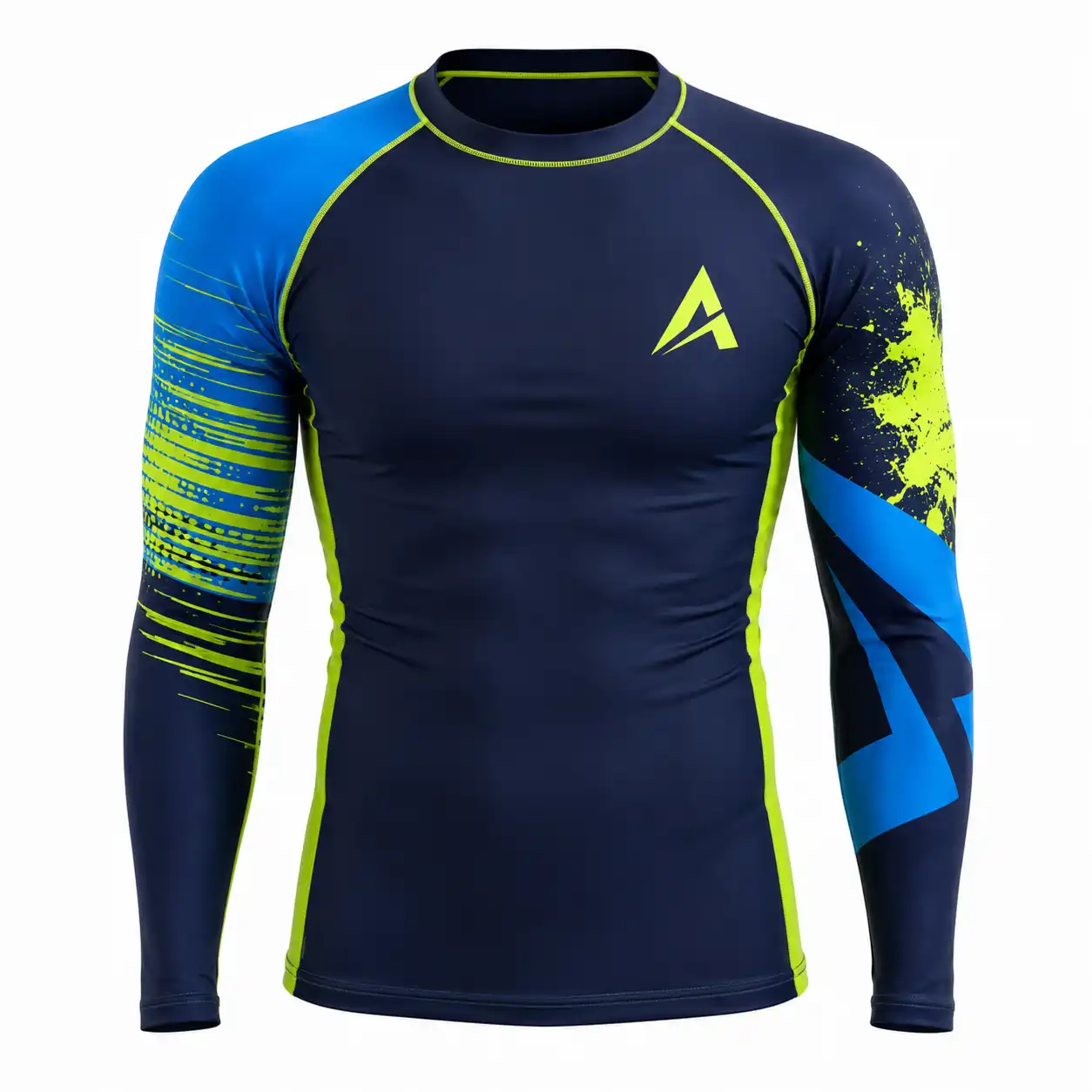
Almost any color can be produced, especially with sublimation printing. Popular combinations include black, white, navy, royal blue, red, grey, green, purple, teal, neon shades, and camouflage or gradient designs.

For a more premium appearance, combinations such as black/gold, black/red, navy/white, charcoal/black, black/teal, or black/silver usually work well.

For BJJ, remember that competition organizations may have specific rules regarding rank colors or the percentage of rank-color panels, so competition-specific rash guards should be designed according to the relevant federation's current regulations.

7. Printing

For professional rash guards, sublimation printing is generally the best choice. The design becomes part of the fabric instead of sitting as a thick layer on top.

Advantages include:

No cracking
No peeling
Better stretch
Detailed graphics
Full-color designs
Logos can cover large areas
Good durability after repeated washing

Cheap heat-transfer prints can eventually crack or peel, particularly on highly stretched areas.

8. Extra Premium Features

For a higher-end rash guard, consider a silicone or elastic anti-slip waistband, mesh ventilation panels, ergonomic panel construction, reinforced collar, odor-control treatment, UPF 50+ protection, moisture management, and custom woven or heat-transfer branding.

If you're ordering from a manufacturer, a strong premium specification would be something like 220–250 GSM, 85% polyester / 15% spandex, 4-way stretch, flatlock seams, sublimation printing, moisture-wicking fabric, and UPF 50+ protection.
Customize Your Order
Choose the options you need before adding to quote.
Size: S Color: Black
We offer competitive wholesale prices for bulk orders. Contact us for a custom quote.

1. Material

The most common high-quality fabrics are:

Polyester + Spandex/Elastane: Usually around 80–90% polyester and 10–20% spandex. Very durable, good for sublimation printing, quick-drying, and commonly used for MMA/BJJ rash guards.
Nylon + Spandex: Usually around 80–85% nylon and 15–20% spandex. Softer and smoother with excellent stretch, often preferred for premium swim/surf rash guards.
4-way stretch fabric is preferable because it stretches both vertically and horizontally without restricting movement.

For a premium product, I would normally look for roughly 180–250 GSM fabric. Lighter fabric feels cooler, while heavier fabric generally feels more substantial and durable.

2. Quality

A high-quality rash guard should have:

Strong 4-way stretch
Good shape recovery after stretching
Moisture-wicking and quick-dry properties
Breathable fabric
Smooth feel against the skin
Resistance to pilling
Good colorfastness
Chlorine/salt-water resistance if intended for swimming or surfing
UPF 50+ protection for outdoor/water use
Fabric that does not become excessively transparent when stretched

For BJJ/MMA, the material should also be difficult to tear and thick enough to withstand repeated grappling.

3. Stitching

Stitching is extremely important.

The better option is usually flatlock stitching, because the seams lie relatively flat against the body and reduce irritation or chafing.

Check for:

Reinforced seams
Clean stitching without loose threads
Strong underarm and shoulder seams
Stretchable thread/seams
Neat collar construction

For combat sports, reinforced stitching around the shoulders, armpits, sleeves, and sides is particularly important.

4. Fit

Rash guards are normally designed to have a compression or close-body fit. They should be tight without seriously restricting movement.

A typical size range would be:

Size Chest Approx. General Fit
XS 32–34 in Extra Small
S 34–36 in Small
M 36–39 in Medium
L 39–42 in Large
XL 42–45 in Extra Large
2XL 45–48 in Double XL
3XL 48–51 in Triple XL

These are only general measurements. Each manufacturer should provide its own size chart, because compression garments can fit very differently between brands.

For production, it is better to specify actual measurements such as chest width, body length, sleeve length, waist width, and collar opening instead of relying only on S/M/L labels.

5. Sleeve Options

Rash guards can be made as:

Short sleeve – cooler and popular for MMA/gym use
Long sleeve – more skin protection and commonly used in BJJ, surfing, and water sports
Sleeveless – less common for traditional rash guards but possible for fitness use

Long sleeves offer better protection against mats, sun exposure, and skin irritation.

6. Colors

Almost any color can be produced, especially with sublimation printing. Popular combinations include black, white, navy, royal blue, red, grey, green, purple, teal, neon shades, and camouflage or gradient designs.

For a more premium appearance, combinations such as black/gold, black/red, navy/white, charcoal/black, black/teal, or black/silver usually work well.

For BJJ, remember that competition organizations may have specific rules regarding rank colors or the percentage of rank-color panels, so competition-specific rash guards should be designed according to the relevant federation's current regulations.

7. Printing

For professional rash guards, sublimation printing is generally the best choice. The design becomes part of the fabric instead of sitting as a thick layer on top.

Advantages include:

No cracking
No peeling
Better stretch
Detailed graphics
Full-color designs
Logos can cover large areas
Good durability after repeated washing

Cheap heat-transfer prints can eventually crack or peel, particularly on highly stretched areas.

8. Extra Premium Features

For a higher-end rash guard, consider a silicone or elastic anti-slip waistband, mesh ventilation panels, ergonomic panel construction, reinforced collar, odor-control treatment, UPF 50+ protection, moisture management, and custom woven or heat-transfer branding.

If you're ordering from a manufacturer, a strong premium specification would be something like 220–250 GSM, 85% polyester / 15% spandex, 4-way stretch, flatlock seams, sublimation printing, moisture-wicking fabric, and UPF 50+ protection.

Material100% Polyester
Sizes AvailableXS, S, M, L, XL, XXL, XXXL
Colors AvailableCustomizable

Customer reviews

No approved reviews yet. Be the first to review this product.
Write a review

Related Products

Rash Guard

MSCW-RG2

Made to OrderSample Available
Contact for price
Rash Guard

MSCW-RG1

Made to OrderSample Available
Contact for price
Rash Guard

MSCW-RG3

Made to OrderSample Available
Contact for price
Rash GuardPrice on request
Chat with us
Compare Products 0
Compare Now